US President Joe Biden has revealed plans to expel Uganda, Gabon, Niger and the Central African Republic (CAR) from a special US-Africa trade program.
The countries were either involved in “gross violations” of human rights or not making progress towards democratic rule, the President stated. Burkina Faso, Mali, and Guinea have all previously been expelled from AGOA after military coups in those countries.
The US introduced the African Growth and Opportunity Act (AGOA) in 2000.
It gives eligible sub-Saharan African countries duty-free access to the US for more than 1,800 products.
President Biden said that Niger and Gabon – both of which are currently under military rule following coups this year – are ineligible for AGOA because they “have not established, or are not making continual progress toward establishing the protection of political pluralism and the rule of law”.
He also said that the removal of the CAR and Uganda from the program was due to “gross violations of internationally recognized human rights” by their governments.
In May, the US government had said it was considering removing Uganda from AGOA and introducing sanctions on the country after it passed a controversial anti-homosexuality law.
The law, which imposes a death penalty on people found guilty of engaging in certain same-sex acts, has faced global criticism.
“Despite intensive engagement between the United States and the Central African Republic, Gabon, Niger, and Uganda, these countries have failed to address United States concerns about their non-compliance with the AGOA eligibility criteria,” President Biden said on Monday, in a letter addressed to the speaker of the US House of Representatives.
The four countries are yet to react to the announcement, which comes just before South Africa is due to host the 20th AGOA forum from Thursday this week.
Their expulsion from AGOA is set to take effect from the start of next year and is likely to impact their economies, as AGOA has been credited with promoting exports, economic growth, and job creation among participating countries.
CAR is likely to be the least impacted by the AGOA expulsion, as it only recorded $881,000 (£722,300) in US exports in 2022, according to US government data.
The country, however, imported goods worth $23m from the US in the same year, creating a massive trade deficit between the two countries.
US data also show that Uganda exported goods worth $174m to the US last year, while Gabon and Niger recorded US exports of $220m and $73m respectively in the same period.
Last month, Ugandan President Yoweri Museveni said that several American companies had already stopped importing textiles – which fall under the Agoa trade deal – from Uganda because of the passing of the anti-homosexuality law.
“The homosexuals in the US are interfering with our export of textiles. Some of the orders have been canceled there,” Mr Museveni was quoted as saying by the privately owned Daily Monitor newspaper.
In August, Mr Museveni banned the importation of second-hand clothes, a move thought to target the US, which is a major supplier of used garments to Uganda and other African countries.
The threat to exclude Niger and Gabon from AGOA is the latest US government action against the two junta-led countries.
The US State Department announced last week that it had suspended most foreign aid to Gabon and would only resume assistance if Gabon’s transitional government establishes democratic rule.
In August, US Secretary of State Antony Blinken announced a similar measure against Niger, saying that the US “is pausing certain foreign assistance programs benefitting the government of Niger”.
]]>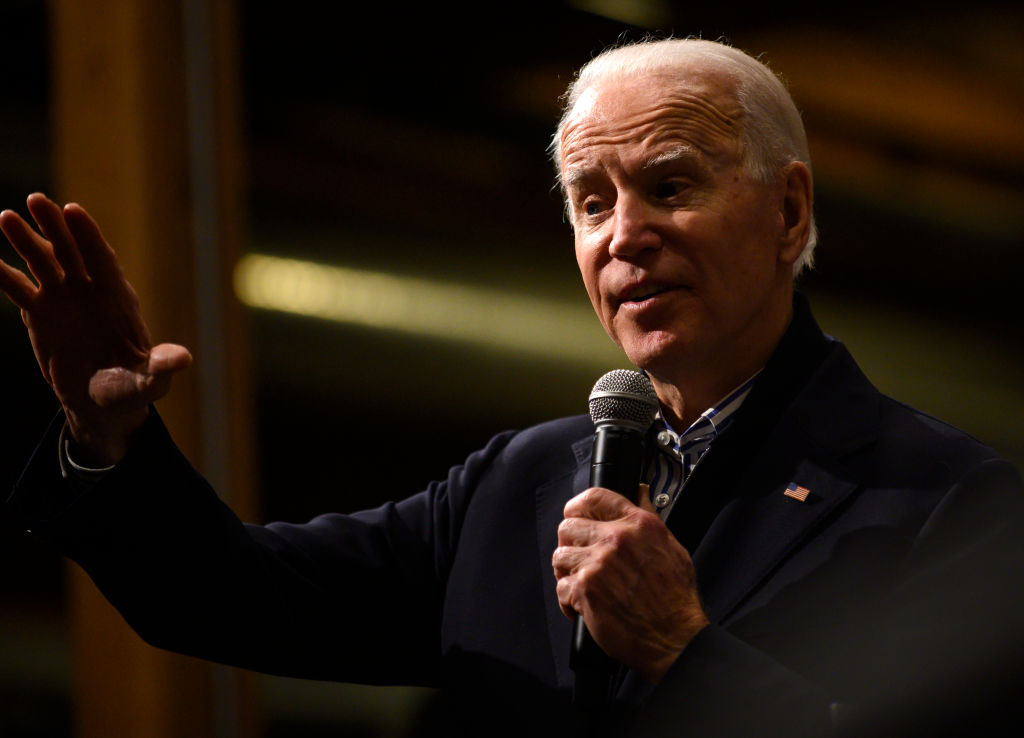
President Joseph R. Biden, USA.
(image credit: Newsweek.com)
credit: Gloria Aradi (BBC News)
US President Joe Biden has revealed plans to expel Uganda, Gabon, Niger, and the Central African Republic (CAR) from a special US-Africa trade program. Burkina Faso, Mali, and Guinea have all previously been expelled from the African Growth and Opportunity Act (Agoa) after military coups in those countries.
The countries were either involved in “gross violations” of human rights or not making progress towards democratic rule, the President argued.
The US introduced the African Growth and Opportunity Act (Agoa) in 2000.
It gives eligible sub-Saharan African countries duty-free access to the US for more than 1,800 products.
President Biden said that Niger and Gabon – both of which are currently under military rule following coups this year – are ineligible for Agoa because they “have not established, or are not making continual progress toward establishing the protection of political pluralism and the rule of law”.
He also said that the removal of the CAR and Uganda from the program was due to “gross violations of internationally recognized human rights” by their governments.
In May, the US government had said it was considering removing Uganda from Agoa and introducing sanctions on the country after it passed a controversial anti-homosexuality law.
The law, which imposes a death penalty on people found guilty of engaging in certain same-sex acts, has faced global criticism.
“Despite intensive engagement between the United States and the Central African Republic, Gabon, Niger, and Uganda, these countries have failed to address United States concerns about their non-compliance with the Agoa eligibility criteria,” President Biden said on Monday, in a letter addressed to the speaker of the US House of Representatives.
The four countries are yet to react to the announcement, which comes just before South Africa is due to host the 20th Agoa forum from Thursday this week.
Their expulsion from Agoa is set to take effect from the start of next year and is likely to impact their economies, as Agoa has been credited with promoting exports, economic growth, and job creation among participating countries.
CAR is likely to be the least impacted by the Agoa expulsion, as it only recorded $881,000 (£722,300) in US exports in 2022, according to US government data.
The country, however, imported goods worth $23m from the US in the same year, creating a massive trade deficit between the two countries.
US data also show that Uganda exported goods worth $174m to the US last year, while Gabon and Niger recorded US exports of $220m and $73m respectively in the same period.
Last month, Ugandan President Yoweri Museveni said that several American companies had already stopped importing textiles – which fall under the Agoa trade deal – from Uganda because of the passing of the anti-homosexuality law.
“The homosexuals in the US are interfering with our export of textiles. Some of the orders have been canceled there,” Mr. Museveni was quoted as saying by the privately owned Daily Monitor newspaper.
In August, Mr Museveni banned the importation of second-hand clothes, a move thought to target the US, which is a major supplier of used garments to Uganda and other African countries.
The threat to exclude Niger and Gabon from Agoa is the latest US government action against the two junta-led countries.
The US State Department announced last week that it had suspended most foreign aid to Gabon and would only resume assistance if Gabon’s transitional government establishes democratic rule.
In August, US Secretary of State Antony Blinken announced a similar measure against Niger, saying that the US “is pausing certain foreign assistance programs benefitting the government of Niger”.
]]>
Story by Hayford Nyanor Kodua (editor)
Washington DC (GS) Ghana’s bustling Information and Communications Technology (ICT) sector is projected to contribute a significant share towards the country’s Gross Domestic Product (GDP).
According to the latest figures released by the International Trade Administration (ITA), an agency under the US Department of Commerce in Washington DC, Ghana’s relentless focus on the development of the ICT sector through accelerated education and ICT infrastructure development, has positioned the country on the path towards integrating its mostly informal business domain into the current advanced world economy.
Led by the Telecommunications industry, the ICT sector added over One billion and Seven Hundred thousand US dollars (US $1.7bn) to Ghana’s economy in 2017 when the New Patriotic Party (NPP) administration took over the reins of power from the erstwhile National Democratic Congress (NDC) party, resulting in an increase of about 3% to the GDP.
Immediately after the smooth transfer of power from the NDC to the NPP in 2017, Ghana’s Vice President, Dr. Mahamudu Bawumia, launched a national crusade to stress the importance of the ICT sector to Ghana’s economic development. The Vice President made it a priority to promote the study of ICT in basic schools up to the university level to train and equip the younger generation with the skills and knowledge in the ICT sector.
Currently, the ICT sector (telephone companies, internet service providers, data processing and storage, television and radio stations, social media platforms, etc), is the fastest-growing industry in Ghana. Data from the ITA of the US Department of Commerce projects the ICT sector to increase to Five Billion US dollars (US $5bn) by the year 2030, contributing 6.25% to the country’s GDP.
Mr. ‘Digitalisation’, as Vice President Bawumia has become known due to his persistent efforts to improve upon ICT education and infrastructure development in Ghana, businesses in the country can now engage in trade and financial transactions with the push of a button. Financial Technology companies (fintechs), such as mobile money operators have made electronic money transfer the most popular means of payment among traders and employers. This has reduced the wait and travel time associated with in-person over-the-counter transactions.
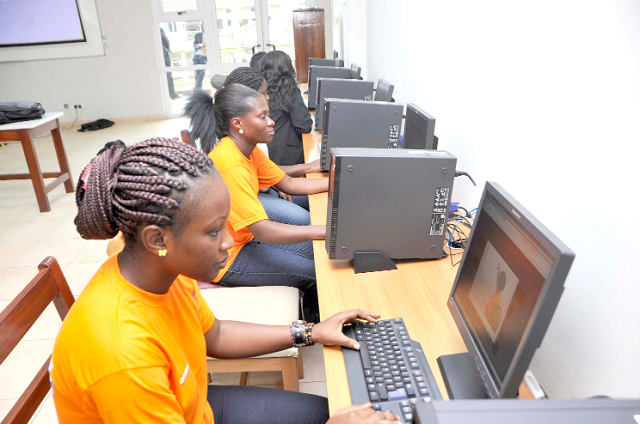
Under the leadership of Vice President Bawumia aka Mr. ‘Digitalisation’, the Accra Digital Center (ADC), National Communication Authority (NCA), and the National Information Technology Agency (NITA), have all been resourced to enable them to operate effectively and offer ICT services to both the state and the private sectors. The Vice President is also involved in the setting up of ICT centers in Ghana’s basic schools and state universities and training colleges with free Wifi access to prepare the next generation of business leaders and innovators for the technologically embedded world economic order.
Ghana is now the second most developed ICT industry in West Africa with internet and mobile phone usage penetration of 68.2%, (World Bank figures), second only to the tiny Island-nation of Cape Verde. This figure has almost doubled since the NPP party took over from the NDC in 2017, (38%). To put it in context, West Africa’s economic powerhouse, Nigeria, can only boast of 55% internet usage among its population.
The infusion of capital and the rapid infrastructure development in the ICT sector has created lots of good-paying jobs for the youth Business owners have also been spared the hustle of waiting on paper checks to clear at the banks, which can take weeks to go through. Instant Mobile Money Transfer (MoMo) has made it possible to move cash around anywhere in Ghana for payment of salaries and wages, remittances, and to make deposits for goods and services.
]]>
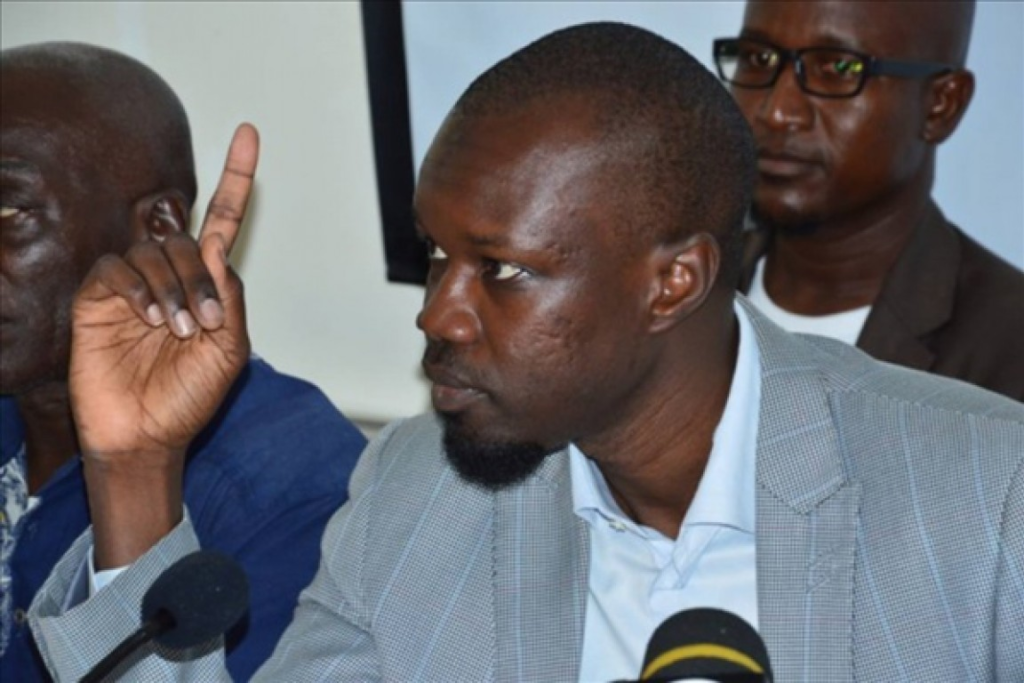
DAKAR (Reuters) – A court in Senegal on Thursday acquitted leading opposition politician Ousmane Sonko of rape and making death threats but sentenced him to two years in jail for corrupting the youth, jeopardising his chances of running for president next year.
Sonko, 48, was accused of raping a woman who worked in a massage parlour in 2021 and making death threats against her. He denies wrongdoing and boycotted court proceedings.
“With this sentence, Sonko cannot be a candidate,” said one of his lawyers, Bamba Cisse. Senegal’s electoral code prevents individuals convicted of a crime from seeking political office.
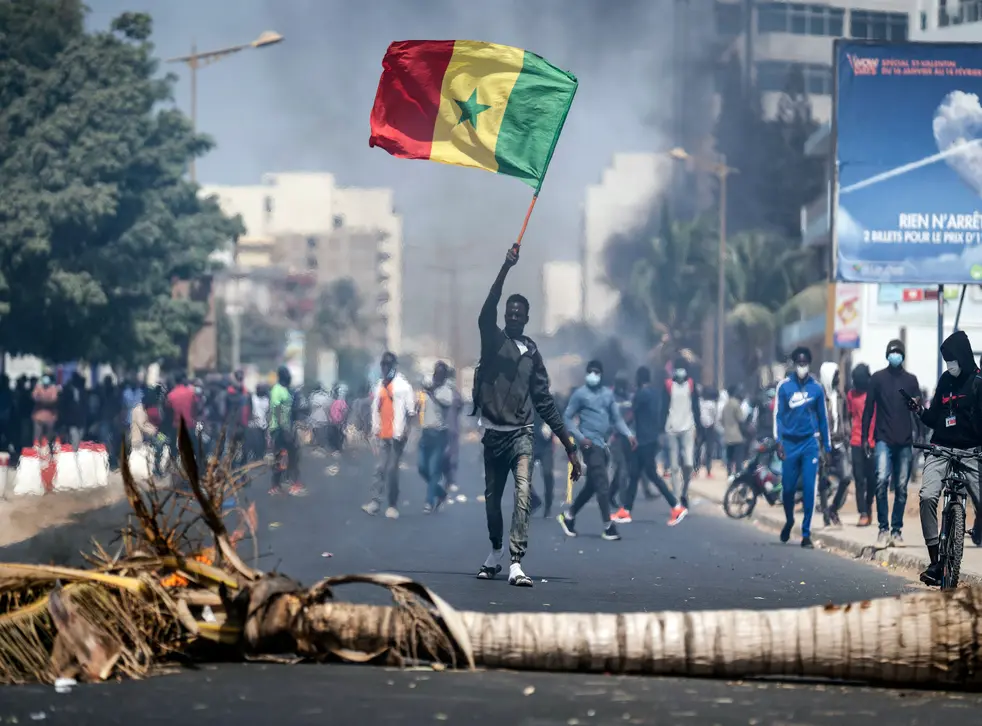
The case has triggered violent street protests in the West African country with Sonko’s supporters denouncing the charges against him as politically motivated, which the government and the justice system deny.
Corrupting youth is a criminal offence in Senegal, described in the penal code as immoral behaviour towards individuals younger than 21. Sonko’s accuser was 20 at the time of the events she alleged took place.
“It is still abuse towards a young girl,” said one of her lawyers, El Hadj Diouf, adding he was satisfied with the verdict. His client will decide whether to appeal against the acquittals, he said.
Separately, Sonko is appealing against a six-month suspended prison sentence for libel. The implications of that case for his presidential bid are not yet clear.
A former tax inspector who came third in the last election, Sonko has tapped into frustrations with President Macky Sall that have grown since he was first elected in 2012.
Critics say Sall has failed to create jobs and has stifled opposition criticism amid rumours he may seek to bypass presidential term limits and run again next year. Sall has neither confirmed nor denied this.
Sonko has garnered strong support among disaffected urban youth, many of whom have responded to his calls to take to the streets to protest against his judicial problems, prompting riot police crackdowns that have led to deaths.
Demonstrations are not uncommon in Senegal and typically increase around elections. But Sall’s second term has been particularly turbulent for a country usually viewed as one of West Africa’s strongest democracies.
Sall on Wednesday said he would not stand idle in the face of “certain actors who have chosen to destroy the country”.
“Those who shoot and kill are not our security forces,” he said after promising free and transparent elections.
]]>
By Christian Akorlie and Maxwell Akalaare Adombila (Credit: Reuters)
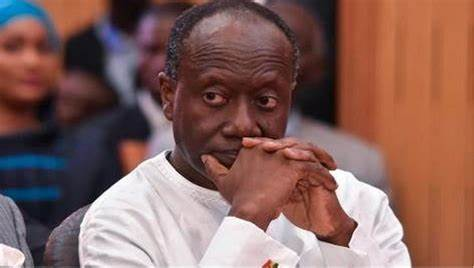
ACCRA (Reuters) – Ghanaian labour unions have asked the government for time to assess a proposal presented on Thursday to restructure pension funds worth around 30 billion Ghanaian cedis ($2.7 billion).
The West African nation is looking to extend the maturity periods of cedi currency bonds that the pension funds hold in exchange for higher interest payments as part of efforts to save billions in near-term debt payments under a loan deal from the International Monetary Fund.
Abraham Koomson, leader of the Federation of Labour, said after the meeting with the Finance Ministry that there was a certain amount of “mistrust of government promises.”
“We need some time as workers’ representatives to engage our constituents on the new proposals,” he told Reuters, adding that a firm decision could be expected by the end of June.
The majority of eligible holders of Ghana’s local bonds participated in a domestic debt exchange in February. The pension funds were exempted after unions threatened to strike, but have now been offered their own deal.
In the proposal to the unions, the government aims to replace old bonds, which have shorter maturity periods with coupons averaging 18.5%, with new ones that have longer maturity dates and yields averaging 21%.
Thomas Kwesi Esso, executive secretary of the lobby group for the pension funds, told Reuters that the offer was an improvement and addresses liquidity concerns with the old bonds.
“We have seen the offer and we think it is better … but we are waiting for organised labour (unions) to have their discussions with the government before we can all take a decision.”
Anthony Yaw Baah, secretary general of the trades union congress, said the unions will analyse the offer and the exchange memorandum document before taking any decision.
The cocoa-, oil- and gold-producing nation has to shave off $10.5 billion in interest payments on its external debt in three years to be able to successfully implement its $3 billion loan deal from the International Monetary Fund meant to address its worst economic crisis in a generation.
]]>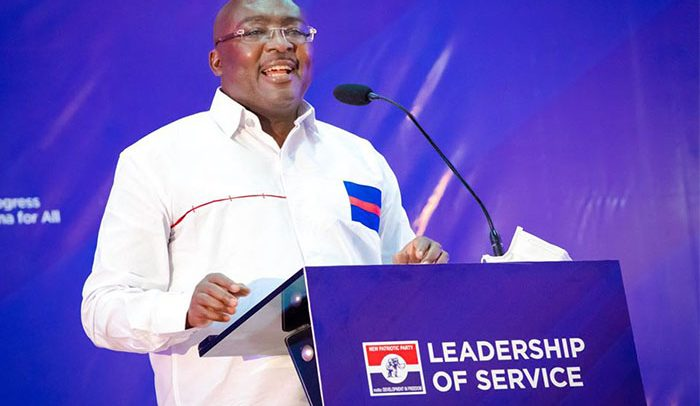
Ghana’s Vice President, Dr. Mahamudu Bawumia, has ended speculation about his intention to run in the 2024 presidential elections after his political surrogates picked up nomination forms on his behalf from the New Patriotic Party (NPP) headquarters today to make his political ambitions unambiguous.
The NPP presidential primary nomination process was opened today May 26, 2023, after the party published the date for the opening of nominations and modalities for the conduct of the primaries through a statement issued by its General Secretary, Justin Kodua Frimpong, on Thursday 25th May 2023. The statement said the Party’s presidential nomination process shall remain open from today May 26th until June 24, 2023.
Vice President Bawumia is the latest to add his name to the growing list of presidential candidates from the camp of the ruling NPP administration. The crowded list includes former Minister for Agriculture, Dr. Owusu Afriyie Akoto, Mr. Kwadwo Alan Kyerematen, former trade minister, Hon Joe Ghartey, former Minister for Railways, Honorable Addai Nimo, former MP for Mampong, among others.
The NPP General Secretary noted in his statement that all aspiring presidential candidates would be required to make a non-refundable deposit of GHC 50,000.00 through a banker’s draft issued to the New Patriotic Party National Headquarters in Accra as the payee.
Dr. Bawumia has been described by his peers as one of the most transformational leaders of Ghana. He has been the principal leader in the integration of Ghana’s economic trading platforms and financial technology systems to enhance business transactions in both the micro and macro business space.
Vice President Bawumia’s expanse experience in economics and financial engineering would come in handy. Having served as the Governor of the Central Bank of the Republic of Zimbabwe during one of the country’s debilitating economic challenges under the rule of the late Robert Mugabe, a Deputy Governor of the Central Bank of Ghana and a leading member of the current Ghana Economic Management Team.
During his tenure as the Head of the Monetary Policy and Financial Stability Department at the Bank of Ghana, under the President Kufour Administration, Dr. Bawumia was part of the architects who introduced and implemented the inflation-targeting framework which made Ghana’s currency, the Cedi, one of the best-performing currencies in the world.
As Vice President and a senior member of the NPP government’s Economic Management Team, Dr. Bawumia was instrumental in helping to grow Ghana’s economic output from a capricious 2.1 -3.4 percent (gross domestic product) GDP growth rate in the 2015-2016 fiscal period to a record 8.1 percent GDP growth rate in 2017. Ghana’s economic output continued to grow at a space of 6.5 percent rate in GDP after 2017 until the covid-19 pandemic and the economic complications from the Russian-Ukraine war upended world food security, trade, energy prices, shipping costs, and economic activities.
In the wake of the harsh economic crisis facing many developing countries post Covid-19, Ghana, which was on a path to economic stability and innovation in its financial sector, had to accept an economic bail-out arrangement with the International Monetary Fund (IMF), for a loan of $3bn to shore up its balance of payment and budget issues. As a condition, Ghana has agreed to make some deep cuts to some of its discretionary expenditures, increase local revenue and improve and maximize the country’s tax mobilization efforts.
]]>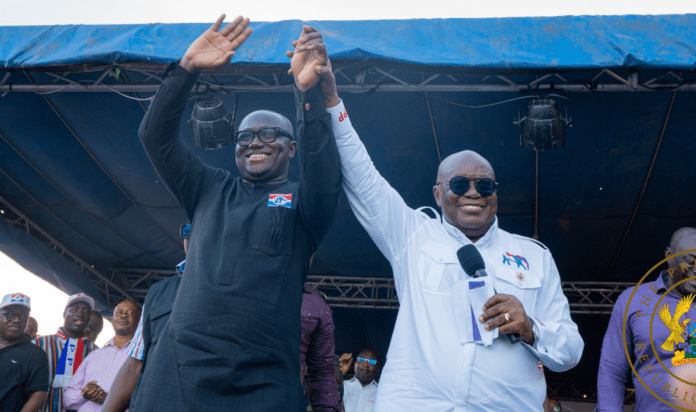
The people of the Sekyere Kumawu Constituency in the Ashanti Region have voted massively for the ruling New Patriotic Party (NPP) to retain the parliamentary seat left vacant due to the demise of the sitting MP, the late Philip Basoah.
It was one of the most expensive and fiercely contested by-elections in Ghana, attracting political heavyweights including President Nana Addo Dankwah Akufo-Addo and his Vice Dr. Mahamudu Bawumia, a potential 2024 presidential candidate, as well as ex-President John Dramani Mahama, who is now the official 2024 presidential candidate for the opposition National Democratic Congress (NDC).
Four indigenous candidates; Ernest Yaw Anim (NPP), NDC’s Thomas Amankwaa, Duah Kwaku (Independent), and another Independent candidate, Kwaku Duah, engaged in an intense political brawl to appeal to the Kumawu constituents for their support.
The by-elections were preceded by the final funeral rites of the late MP, Hon. Philip Atta Basoah, which took place on the weekend prior to Tuesday, December 25, the day of the elections. It was attended by officials from the top hierarchy of government, political parties, and prominent chiefs including the Paramount Chief of the Kumawu Traditional Area, Barima Safo Tweneboa Kodua, as well as some of the late MP’s fellow lawmakers.
The late Philip Basoah, who passed on on March 27, 2023, after a brief health episode was a two-term MP. He was first elected to parliament in 2016 and re-elected in 2020 to represent the people of Kumawu. he was 53.
The winner of the by-elections, a certified Chartered Accountant, Ernest Yaw Anim, who stood on the ticket of the NPP garnered 70.19 percent (15264) of the valid votes cast to retain the Kumawu parliamentary seat for the ruling party.
Despite the tremendous showing of the NDC national leadership, led by ex-President John Mahama and Chairman Asiedu Nketiah to push their candidate Thomas Amankwaa to the finish line first, he came in a disappointing distant second with 17.29 percent (3723), Duah Kwaku, who came in second in the 2020 parliamentary elections as an independent, was rewarded with a paltry 11.51 percent (2478) whilst a relatively unknown political newcomer, a Tema-based business manager, Kwaku Duah came in fourth with 0.29 percent (62) votes.
Figures released by Ghana’s Electoral Commission (EC), through its Returning Officer, Paul Agyemang, put the total rate of turnout at 62.45 or 21,527 votes cast out of 34,790 registered voters in the Kumawu constituency.
]]>European lithium refiner Livista Energy said on Monday that it has formed a partnership with African miner CAA Mining to set up a conversion facility in Takoradi, western Ghana for the processing of lithium.
Livista aims to convert spodumene, a mineral with lithium content, produced in Ghana into an intermediary lithium chemical at the facility, which would then be exported to the company’s European plant for further refining.
Building local lithium refining capability in Ghana would provide employment opportunities and deliver new sources for the African country’s gross domestic product, said Martin Kwaku Ayisi, the chief executive of Minerals Commission Ghana.
Demand for lithium, a key component of electric vehicle batteries, has jumped in recent years as the world transitions towards green energy.
CAA had already been granted a license to mine in the area next to the Ewoyaa Lithium Deposit, currently in development by Atlantic Lithium Ltd.
When completed, the plant is expected to generate over $15bn. in revenue over its life span.
Livista’s European facility is expected to begin production in 2026.
]]>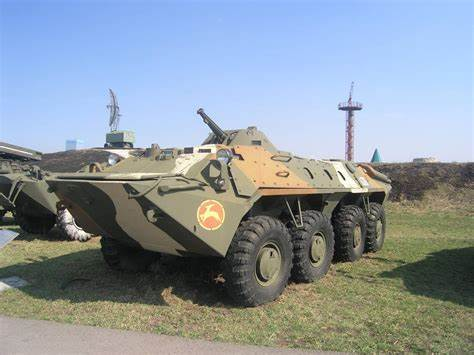
BTR-70 Armored Personnel Carrier (Made in Russia)
The Ghana Armed Forces have taken delivery of some 175 armored personnel carrier vehicles and radio communication equipment to replenish its dilapidated military and logistical equipment to meet the ever-changing security challenges facing Ghana and governments in the West African sub-region.
Nana Addo Dankwah Akufo-Addo, the President of the Republic of Ghana, handed over the new military equipment to the Ghana Armed Forces on Wednesday, February 1, 2023, in a ceremony at the Gondar Barracks in the nation’s capital, Accra.
The 175 vehicles comprise 20 BTR-70 armored personnel carriers and 70 Kamaz troop-carrying vehicles all made by the Russian Federation. The 8-wheeled BTR-70 armored personnel vehicles and the Kamaz trucks were developed by the Soviet Union in 1969 and they were deployed to Afghanistan during Russia’s botched invasion of the Islamic nation in 1979
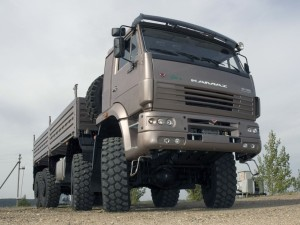
Kamaz Troop Carrying Truck (Made in Russia)

Husky Armored Vehicle (Made in UK)
Also included in the delivery are 20 Husky Armored Vehicles manufactured in the United Kingdom by the Navistar Defence corporation, 65 assorted vehicles manufactured by the Toyota Company in Japan, as well as radio equipment to improve communication among the forces.
In an address, President Nana Akufo-Addo said the new equipment will go a long way to improve the mobility and security operations of the Ghana Armed Forces (GAF), especially in the northern parts of the country where there is instability and terror threats from violent groups along the country’s borders.
The President explained since 2020, the NPP government has been exploring various avenues to re-tool, construct and upgrade the existing facilities at 15 Forward Operating Bases and new units. He disclosed that the new units include the 154 and 155 Armored Regiments, and the 10 and 11 Mechanized Battalions as well as supporting logistics units.
The Commander-in-Chief of the Ghana Armed Forces called for closer collaboration between the Ministries of the Interior, National Security, Foreign Affairs, and the Ghana Revenue Authority to deter any group(s) that would attempt to derail the peace and economic gains achieved by the country over the years.
]]>