US President Joe Biden has revealed plans to expel Uganda, Gabon, Niger and the Central African Republic (CAR) from a special US-Africa trade program.
The countries were either involved in “gross violations” of human rights or not making progress towards democratic rule, the President stated. Burkina Faso, Mali, and Guinea have all previously been expelled from AGOA after military coups in those countries.
The US introduced the African Growth and Opportunity Act (AGOA) in 2000.
It gives eligible sub-Saharan African countries duty-free access to the US for more than 1,800 products.
President Biden said that Niger and Gabon – both of which are currently under military rule following coups this year – are ineligible for AGOA because they “have not established, or are not making continual progress toward establishing the protection of political pluralism and the rule of law”.
He also said that the removal of the CAR and Uganda from the program was due to “gross violations of internationally recognized human rights” by their governments.
In May, the US government had said it was considering removing Uganda from AGOA and introducing sanctions on the country after it passed a controversial anti-homosexuality law.
The law, which imposes a death penalty on people found guilty of engaging in certain same-sex acts, has faced global criticism.
“Despite intensive engagement between the United States and the Central African Republic, Gabon, Niger, and Uganda, these countries have failed to address United States concerns about their non-compliance with the AGOA eligibility criteria,” President Biden said on Monday, in a letter addressed to the speaker of the US House of Representatives.
The four countries are yet to react to the announcement, which comes just before South Africa is due to host the 20th AGOA forum from Thursday this week.
Their expulsion from AGOA is set to take effect from the start of next year and is likely to impact their economies, as AGOA has been credited with promoting exports, economic growth, and job creation among participating countries.
CAR is likely to be the least impacted by the AGOA expulsion, as it only recorded $881,000 (£722,300) in US exports in 2022, according to US government data.
The country, however, imported goods worth $23m from the US in the same year, creating a massive trade deficit between the two countries.
US data also show that Uganda exported goods worth $174m to the US last year, while Gabon and Niger recorded US exports of $220m and $73m respectively in the same period.
Last month, Ugandan President Yoweri Museveni said that several American companies had already stopped importing textiles – which fall under the Agoa trade deal – from Uganda because of the passing of the anti-homosexuality law.
“The homosexuals in the US are interfering with our export of textiles. Some of the orders have been canceled there,” Mr Museveni was quoted as saying by the privately owned Daily Monitor newspaper.
In August, Mr Museveni banned the importation of second-hand clothes, a move thought to target the US, which is a major supplier of used garments to Uganda and other African countries.
The threat to exclude Niger and Gabon from AGOA is the latest US government action against the two junta-led countries.
The US State Department announced last week that it had suspended most foreign aid to Gabon and would only resume assistance if Gabon’s transitional government establishes democratic rule.
In August, US Secretary of State Antony Blinken announced a similar measure against Niger, saying that the US “is pausing certain foreign assistance programs benefitting the government of Niger”.
]]>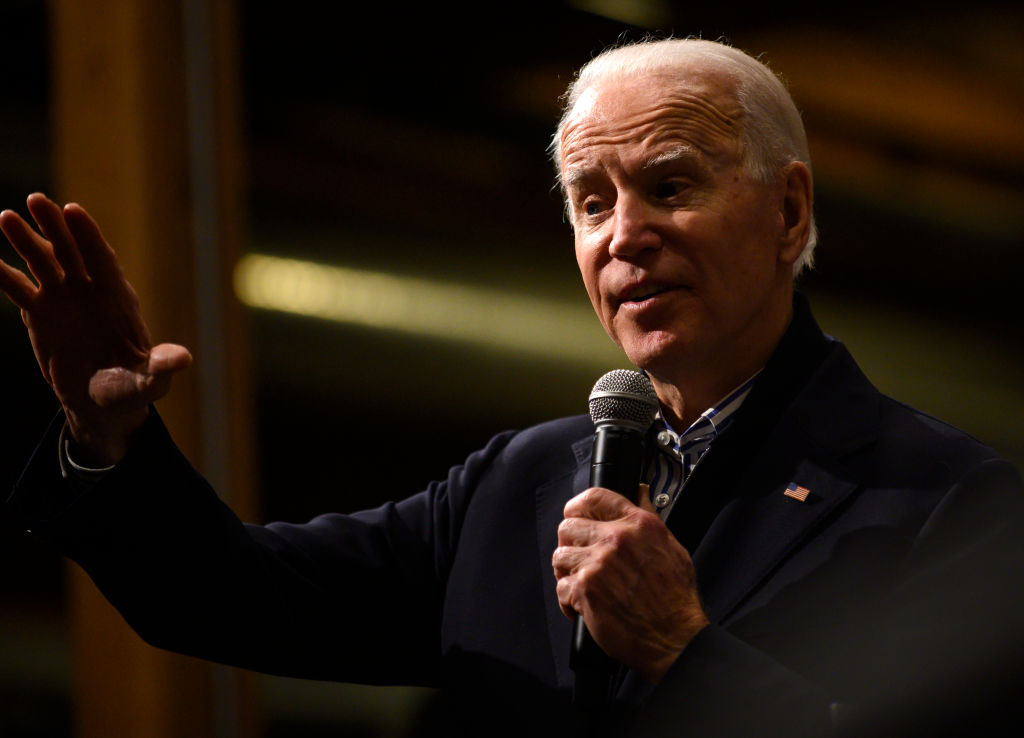
President Joseph R. Biden, USA.
(image credit: Newsweek.com)
credit: Gloria Aradi (BBC News)
US President Joe Biden has revealed plans to expel Uganda, Gabon, Niger, and the Central African Republic (CAR) from a special US-Africa trade program. Burkina Faso, Mali, and Guinea have all previously been expelled from the African Growth and Opportunity Act (Agoa) after military coups in those countries.
The countries were either involved in “gross violations” of human rights or not making progress towards democratic rule, the President argued.
The US introduced the African Growth and Opportunity Act (Agoa) in 2000.
It gives eligible sub-Saharan African countries duty-free access to the US for more than 1,800 products.
President Biden said that Niger and Gabon – both of which are currently under military rule following coups this year – are ineligible for Agoa because they “have not established, or are not making continual progress toward establishing the protection of political pluralism and the rule of law”.
He also said that the removal of the CAR and Uganda from the program was due to “gross violations of internationally recognized human rights” by their governments.
In May, the US government had said it was considering removing Uganda from Agoa and introducing sanctions on the country after it passed a controversial anti-homosexuality law.
The law, which imposes a death penalty on people found guilty of engaging in certain same-sex acts, has faced global criticism.
“Despite intensive engagement between the United States and the Central African Republic, Gabon, Niger, and Uganda, these countries have failed to address United States concerns about their non-compliance with the Agoa eligibility criteria,” President Biden said on Monday, in a letter addressed to the speaker of the US House of Representatives.
The four countries are yet to react to the announcement, which comes just before South Africa is due to host the 20th Agoa forum from Thursday this week.
Their expulsion from Agoa is set to take effect from the start of next year and is likely to impact their economies, as Agoa has been credited with promoting exports, economic growth, and job creation among participating countries.
CAR is likely to be the least impacted by the Agoa expulsion, as it only recorded $881,000 (£722,300) in US exports in 2022, according to US government data.
The country, however, imported goods worth $23m from the US in the same year, creating a massive trade deficit between the two countries.
US data also show that Uganda exported goods worth $174m to the US last year, while Gabon and Niger recorded US exports of $220m and $73m respectively in the same period.
Last month, Ugandan President Yoweri Museveni said that several American companies had already stopped importing textiles – which fall under the Agoa trade deal – from Uganda because of the passing of the anti-homosexuality law.
“The homosexuals in the US are interfering with our export of textiles. Some of the orders have been canceled there,” Mr. Museveni was quoted as saying by the privately owned Daily Monitor newspaper.
In August, Mr Museveni banned the importation of second-hand clothes, a move thought to target the US, which is a major supplier of used garments to Uganda and other African countries.
The threat to exclude Niger and Gabon from Agoa is the latest US government action against the two junta-led countries.
The US State Department announced last week that it had suspended most foreign aid to Gabon and would only resume assistance if Gabon’s transitional government establishes democratic rule.
In August, US Secretary of State Antony Blinken announced a similar measure against Niger, saying that the US “is pausing certain foreign assistance programs benefitting the government of Niger”.
]]>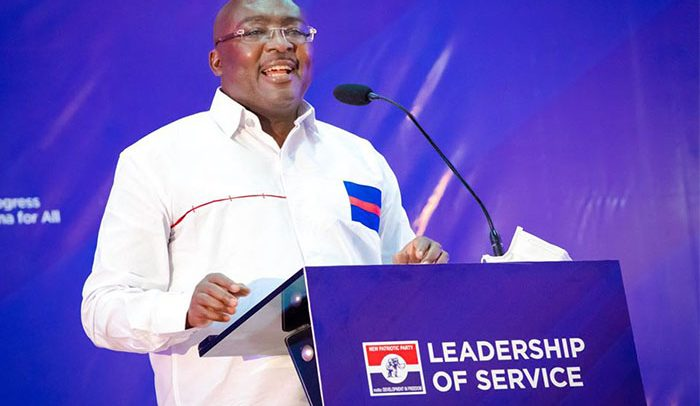
Ghana’s Vice President, Dr. Mahamudu Bawumia, has ended speculation about his intention to run in the 2024 presidential elections after his political surrogates picked up nomination forms on his behalf from the New Patriotic Party (NPP) headquarters today to make his political ambitions unambiguous.
The NPP presidential primary nomination process was opened today May 26, 2023, after the party published the date for the opening of nominations and modalities for the conduct of the primaries through a statement issued by its General Secretary, Justin Kodua Frimpong, on Thursday 25th May 2023. The statement said the Party’s presidential nomination process shall remain open from today May 26th until June 24, 2023.
Vice President Bawumia is the latest to add his name to the growing list of presidential candidates from the camp of the ruling NPP administration. The crowded list includes former Minister for Agriculture, Dr. Owusu Afriyie Akoto, Mr. Kwadwo Alan Kyerematen, former trade minister, Hon Joe Ghartey, former Minister for Railways, Honorable Addai Nimo, former MP for Mampong, among others.
The NPP General Secretary noted in his statement that all aspiring presidential candidates would be required to make a non-refundable deposit of GHC 50,000.00 through a banker’s draft issued to the New Patriotic Party National Headquarters in Accra as the payee.
Dr. Bawumia has been described by his peers as one of the most transformational leaders of Ghana. He has been the principal leader in the integration of Ghana’s economic trading platforms and financial technology systems to enhance business transactions in both the micro and macro business space.
Vice President Bawumia’s expanse experience in economics and financial engineering would come in handy. Having served as the Governor of the Central Bank of the Republic of Zimbabwe during one of the country’s debilitating economic challenges under the rule of the late Robert Mugabe, a Deputy Governor of the Central Bank of Ghana and a leading member of the current Ghana Economic Management Team.
During his tenure as the Head of the Monetary Policy and Financial Stability Department at the Bank of Ghana, under the President Kufour Administration, Dr. Bawumia was part of the architects who introduced and implemented the inflation-targeting framework which made Ghana’s currency, the Cedi, one of the best-performing currencies in the world.
As Vice President and a senior member of the NPP government’s Economic Management Team, Dr. Bawumia was instrumental in helping to grow Ghana’s economic output from a capricious 2.1 -3.4 percent (gross domestic product) GDP growth rate in the 2015-2016 fiscal period to a record 8.1 percent GDP growth rate in 2017. Ghana’s economic output continued to grow at a space of 6.5 percent rate in GDP after 2017 until the covid-19 pandemic and the economic complications from the Russian-Ukraine war upended world food security, trade, energy prices, shipping costs, and economic activities.
In the wake of the harsh economic crisis facing many developing countries post Covid-19, Ghana, which was on a path to economic stability and innovation in its financial sector, had to accept an economic bail-out arrangement with the International Monetary Fund (IMF), for a loan of $3bn to shore up its balance of payment and budget issues. As a condition, Ghana has agreed to make some deep cuts to some of its discretionary expenditures, increase local revenue and improve and maximize the country’s tax mobilization efforts.
]]>
The people of the Sekyere Kumawu Constituency in the Ashanti Region have voted massively for the ruling New Patriotic Party (NPP) to retain the parliamentary seat left vacant due to the demise of the sitting MP, the late Philip Basoah.
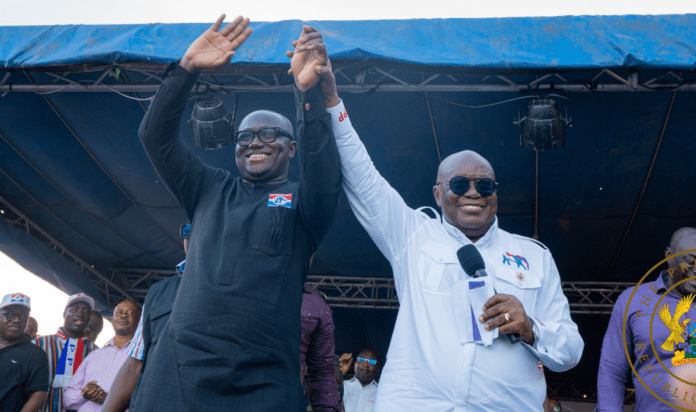
It was one of the most expensive and fiercely contested by-elections in Ghana, attracting political heavyweights including President Nana Addo Dankwah Akufo-Addo and his Vice Dr. Mahamudu Bawumia, a potential 2024 presidential candidate, as well as ex-President John Dramani Mahama, who is now the official 2024 presidential candidate for the opposition National Democratic Congress (NDC).
Four indigenous candidates; Ernest Yaw Anim (NPP), NDC’s Thomas Amankwaa, Duah Kwaku (Independent), and another Independent candidate, Kwaku Duah, engaged in an intense political brawl to appeal to the Kumawu constituents for their support.
The by-elections were preceded by the final funeral rites of the late MP, Hon. Philip Atta Basoah, which took place on the weekend prior to Tuesday, December 25, the day of the elections. It was attended by officials from the top hierarchy of government, political parties, and prominent chiefs including the Paramount Chief of the Kumawu Traditional Area, Barima Safo Tweneboa Kodua, as well as some of the late MP’s fellow lawmakers.
The late Philip Basoah, who passed on on March 27, 2023, after a brief health episode was a two-term MP. He was first elected to parliament in 2016 and re-elected in 2020 to represent the people of Kumawu. he was 53.
The winner of the by-elections, a certified Chartered Accountant, Ernest Yaw Anim, who stood on the ticket of the NPP garnered 70.19 percent (15264) of the valid votes cast to retain the Kumawu parliamentary seat for the ruling party.
Despite the tremendous showing of the NDC national leadership, led by ex-President John Mahama and Chairman Asiedu Nketiah to push their candidate Thomas Amankwaa to the finish line first, he came in a disappointing distant second with 17.29 percent (3723), Duah Kwaku, who came in second in the 2020 parliamentary elections as an independent, was rewarded with a paltry 11.51 percent (2478) whilst a relatively unknown political newcomer, a Tema-based business manager, Kwaku Duah came in fourth with 0.29 percent (62) votes.
Figures released by Ghana’s Electoral Commission (EC), through its Returning Officer, Paul Agyemang, put the total rate of turnout at 62.45 or 21,527 votes cast out of 34,790 registered voters in the Kumawu constituency.
]]>
The New Patriotic Party, NPP, government suffered a huge political setback yesterday with the resignation of the Minister for Trade and Industry amidst a debilitating economic crisis facing the country.
Alan Kwadwo Kyerematen, who has been in charge of Ghana’s Trade and Industry Ministry for the past six (6) years wrote a letter to President Nana Akufo-Addo on Thursday 5th January 2023, informing the Jubilee House of his decision to vacate his ministerial appointment at the Trade Ministry.
Consequently, a communication from the Jubilee House, dated January 6, 2023, and signed by the Communication Director, Eugene Arhin, said the President had accepted the resignation letter from the former Trade and Industry Minister Alan Kyerematen.
“The President of the Republic, Nana Addo Dankwa Akufo-Addo, on Friday, 6th January 2023, accepted the resignation from the office of Mr. Alan Kyerematen as Minister for Trade and Industry. this was after Mr. Kyerematen, on Thursday, 5th January, informed the President personally of his decision to resign, and subsequently submitted his resignation letter to him”, the statement intimated.
The President, the statement added, thanked Mr. Kyerematen for his services to his government and to the country, and wished him well in his future endeavors.
The Jubilee House statement also disclosed that the President has asked the Minister for Finance, Ken Ofori-Atta, to act as caretaker Minister at the Ministry of Trade and Industry, until a substantive appointment is made.
Prior to his resignation, Mr. Kyerematen, who is also affectionately called Alan Cash by his political followers, had been rumored to harbor an ambition to run for the office of Ghana’s presidency after the departure of his boss, Nana Akufo-Addo, who is expected to step down in January 2025, after serving the maximum 2-term limit in office.
With an official unveiling of his campaign to contest for the presidential nomination of the NPP looming large on the horizon, this would not be the first rodeo for Mr. Kyerematen. His first official attempt to lead the NPP as the presidential candidate happened in 2007. He captured 32.3% of the votes cast by the delegates, becoming a runner-up to Nana Akufo-Addo who won with 47.96%.
Mr. Alan Kyerematen also ran for the leadership of the NPP in 2010 and 2014, but he was rejected by the NPP delegates on all those attempts, including losing to Nana Akufo-Addo in 2014 who won with over 94% of the total votes cast. When Mr. Kyeremayen officially enters the presidential race, it will be his fourth time.
Some political and economic analysts have expressed mixed feelings about the abrupt resignation of the former Cabinet Minister, who was very instrumental as a member of the country’s Economic Management Team (EMT). Some believe that Alan Cash was jumping ship and deserting his comrades at a very critical moment in Ghana’s economic struggles.
]]>Mali’s military leader has pardoned 49 soldiers from neighboring Ivory Coast who were arrested in July and accused of being mercenaries, the Malian presidency said in a statement.
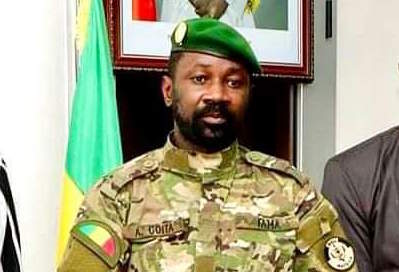
Mali’s Colonel Assimi Goita, leader of the Malian military government.
The 49 were detained after arriving at Mali’s Bamako airport. Ivory Coast said the soldiers were part of a United Nations peacekeeping mission in Mali and were contracted to work for a private company contracted by the UN.
The soldiers’ arrests and charges against them sparked a diplomatic dispute between Mali and Ivory Coast.
Colonel Abdoulaye Maiga, the Mali government’s spokesman, said in a statement the pardon granted by Mali’s president, Colonel Assimi Goita, “demonstrates once again his commitment to peace, dialogue, pan-Africanism and the preservation of fraternal and secular relations with regional countries, in particular, those between Mali and Ivory Coast”.
Goita seized power in Mali in two coups, first in 2020 and then the following year, when he took control after firing the president and prime minister of the transitional government.
The mass pardoning comes one week after 46 of the Ivorian soldiers were sentenced to 20 years in prison. Three other defendants, all women who were released in September but tried in absentia, had been sentenced to death.
The 49 were convicted of an “attack and conspiracy against the government” and of seeking to undermine state security, public prosecutor Ladji Sara said in a statement at the time. The trial opened in the capital Bamako on December 29 and concluded the following day.
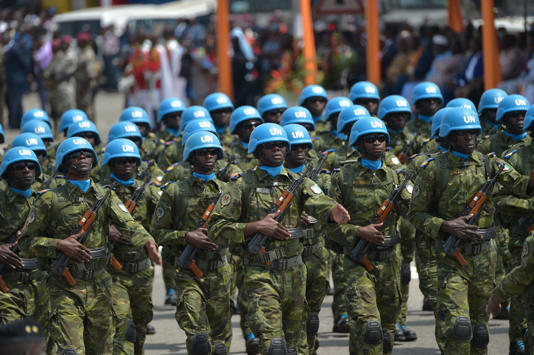
After the Ivorian soldiers were arrested, the UN admitted to some procedural “dysfunctions” in a note addressed to the Malian government and said that “certain measures have not been followed” in their deployment to Mali.
The Ivorian presidency had also acknowledged in September “shortcomings and misunderstandings” regarding the arrival of its soldiers in Mali.
The statement on Friday announcing the pardon described the move as an “independent decision” symbolizing the president’s commitment to good governance and “preserving fraternal relations” with countries in the region, particularly Ivory Coast. It did not specify when the soldiers would leave prison.
Ivory Coast’s government was not immediately available for comment. It has previously said its troops were being held hostage and made repeated pleas for their release. Ivorian authorities had also warned the “hostage-taking” would lead to “consequences”.
Mali has grown increasingly isolated since military officers toppled the government in 2020 and failed on election promises, prompting sanctions from West Africa’s main political and economic bloc, the Economic Community of West African States (ECOWAS).
Several countries, including Ivory Coast, have decided to withdraw troops sent to help fight a decade-old uprising in Mali this year due to the military government’s collaboration with Russian mercenaries.
ECOWAS, towards which Mali’s government has grown increasingly hostile, had also threatened to impose more sanctions on the country if the Ivorian soldiers were not freed.
Togo’s President Faure Gnassingbe, who was mediating the crisis, met Goita in Bamako on Thursday before heading to Ivory Coast. The Malian government in its statement on Friday thanked Gnassingbe “for his tireless efforts and constant commitment to dialogue and peace in the region”.
]]>A court in Mali has sentenced 46 soldiers from Ivory Coast to 20 years imprisonment for conspiring against the government, and three others to death in absentia.
Ivory Coast announced last month it would withdraw its remaining soldiers from the UN peacekeeping mission in Mali.
The soldiers were also fined more than $3,000 and convicted of carrying and transporting weapons, Prosecutor General Ladji Sara said in a statement on Friday.
Forty-nine Ivorian soldiers were arrested at the airport in Mali’s capital Bamako in July, three of whom were later released. Their arrests led to a diplomatic row between the neighboring countries and widespread condemnation from regional allies.
The soldiers were detained when they went to work for Sahel Aviation Service, a private company contracted to work in Mali by the United Nations.
Mali’s military administration said the soldiers were acting as mercenaries, while Ivory Coast said they were part of a UN peacekeeping mission.
They were charged with attempting to undermine state security in August and convicted in a trial that began on Thursday and ended on Friday, ahead of a January 1 deadline set by the Economic Community of West African States (ECOWAS), the region’s main political and economic bloc, to release them or face sanctions.
]]>Pelé, a three-time World Cup winner and one of the greatest soccer players in history, died Thursday at the age of 82.
Tributes poured in on social media from around the globe, with many applauding Pelé’s legacy, while also commenting on his superior skill and impact on the world stage.
Pelé himself said he scored 1,283 goals in all matches played, official and unofficial. Other sources have provided slightly different totals. He scored 77 international goals in official matches for Brazil — tied with Neymar — according to FIFA.
Neymar honored his countryman in an Instagram post, writing, “Pelé changed everything. He transformed football into art, entertainment. Football and Brazil elevated their standing thanks to the King! He is gone, but his magic will endure. Pelé is eternal!”

President Joe Biden, former President Barack Obama, and tennis legend Billie Jean King also tweeted tributes to the soccer superstar. The famous Christ the Redeemer statue in Rio was illuminated in green and yellow on Thursday night.
]]>
The ruling New Patriotic Party, NPP, has appointed new Directors, Executives, and Deputies to support their newly-elected national Officers in the implementation of the Party’s programs in a bid to retain power in the 2024 generation elections.
The General Secretary of the NPP, Justin Kodua Frimpong, in a statement said pursuant to Articles 10 and 15 of the NPP Constitution, the National Executive Committee, NEC, met today August 26, 2022, in Accra, to appoint new Directors, Executives, and Deputies.
Veteran Politician, Mr. Dan Botwe, a former General Secretary of the Party, has been appointed as the Director of Campaign Strategy. Other notable names on the list include Richard Ahiagbah, Director of Communication, (former Ag, Director of the Danquah Institute}, William Yamoah – Director of Finance and Administration, Evans Nimako – Director of Research and Elections and Frederick Kofi Ameyaw, the new Director in charge of External Affairs. The position of Director of Protocol went to Kwodwo Afari whilst Eric Ntori heads the Directorate of Information Technology (I.T.).
Below is the full list of the newly appointed national officers:
DEPUTY GENERAL SECRETARIES
1) Dr. Antoinette Tsibu-Darko
2) Haruna Mohammed
DEPUTY NATIONAL ORGANIZERS
1) Joseph Nganiba Kwayaja
2) Chris Lloyd Nii Kwei
DEPUTY NATIONAL WOMEN’S ORGANIZERS
1) Safia Mohammed
2) Miriam Awurama Duah
DEPUTY NATIONAL YOUTH ORGANIZERS
1) Isaac Jay Nii Amahtey Hyde
2) Sandra Sarkodie-Addo
DEPUTY NATIONAL NASARA COORDINATORS
1) Abdul Taric Bonsu
2) Hajia Ayesha Yussif
Furthermore, the National Executive Committee appointed the following persons to serve as Directors of the Party at the National Secretariat in accordance with Article 10(7)(3) of the Party Constitution:
DIRECTOR OF CAMPAIGN STRATEGY
Hon Dan Botwe
DIRECTOR OF FINANCE AND ADMINISTRATION
William Yamoah
DIRECTORATE OF RESEARCH AND ELECTIONS
1) Evans Nimako (Director of Research and Elections)
2) Dr. Ernest Owusu Kumih (Director of Research)
3) Dr. Nyame Baafi (Deputy Director of Research)
DIRECTORATE OF COMMUNICATIONS
1) Mr. Richard Ahiagbah (Director)
2) Mr. Ernest Owusu Bempah (Deputy)
3) Mr. Kamal Deen Abdulai (Deputy)
4) Mrs. Rabi Salifu (Deputy)
5) Miss Jennifer Ofori Appiah (Deputy)
6) George Krobea Asante (Deputy)
7) Dr. Asiedu Kokro
DIRECTORATE FOR EXTERNAL AFFAIRS
1) Mr. Frederick Kofi Ameyaw (Director)
2) Nana Asafo-Adjei Ayeh (Deputy)
3) Portia Adwoa Siaw (Deputy)
DIRECTORATE OF PROTOCOLS
1) Kwodwo Afari (Director)
2) Kwabena Ofori Frimpong (Deputy)
DIRECTORATE OF INFORMATION TECHNOLOGY (I.T)
1) Mr. Eric Ntori (Director)
2) Mr. Stephen Forson (Deputy Director)
The Party takes this opportunity to congratulate all the Appointees and implores them to effectively discharge their mandate as the Party seeks to win the 2024 general elections.
…Signed…
JUSTIN KODUA FRIMPONG (GENERAL SECRETARY)
]]>