Story by Hayford Nyanor Kodua (editor)
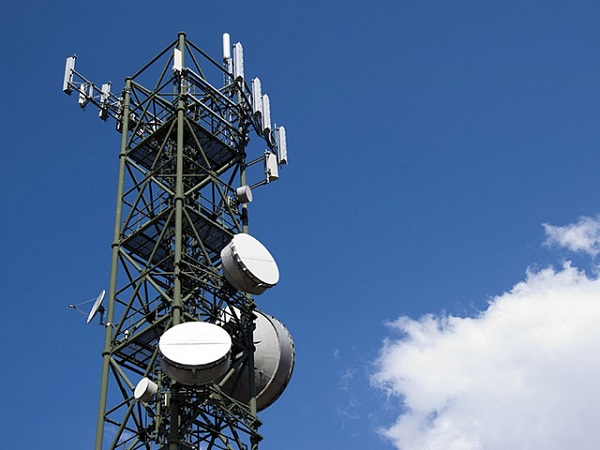
Washington DC (GS) Ghana’s bustling Information and Communications Technology (ICT) sector is projected to contribute a significant share towards the country’s Gross Domestic Product (GDP).
According to the latest figures released by the International Trade Administration (ITA), an agency under the US Department of Commerce in Washington DC, Ghana’s relentless focus on the development of the ICT sector through accelerated education and ICT infrastructure development, has positioned the country on the path towards integrating its mostly informal business domain into the current advanced world economy.
Led by the Telecommunications industry, the ICT sector added over One billion and Seven Hundred thousand US dollars (US $1.7bn) to Ghana’s economy in 2017 when the New Patriotic Party (NPP) administration took over the reins of power from the erstwhile National Democratic Congress (NDC) party, resulting in an increase of about 3% to the GDP.
Immediately after the smooth transfer of power from the NDC to the NPP in 2017, Ghana’s Vice President, Dr. Mahamudu Bawumia, launched a national crusade to stress the importance of the ICT sector to Ghana’s economic development. The Vice President made it a priority to promote the study of ICT in basic schools up to the university level to train and equip the younger generation with the skills and knowledge in the ICT sector.
Currently, the ICT sector (telephone companies, internet service providers, data processing and storage, television and radio stations, social media platforms, etc), is the fastest-growing industry in Ghana. Data from the ITA of the US Department of Commerce projects the ICT sector to increase to Five Billion US dollars (US $5bn) by the year 2030, contributing 6.25% to the country’s GDP.
Mr. ‘Digitalisation’, as Vice President Bawumia has become known due to his persistent efforts to improve upon ICT education and infrastructure development in Ghana, businesses in the country can now engage in trade and financial transactions with the push of a button. Financial Technology companies (fintechs), such as mobile money operators have made electronic money transfer the most popular means of payment among traders and employers. This has reduced the wait and travel time associated with in-person over-the-counter transactions.
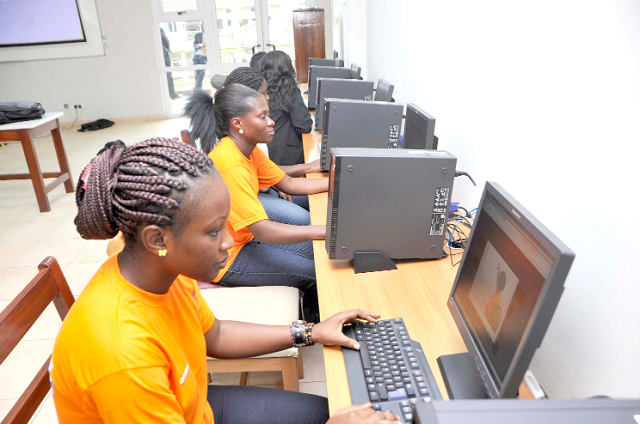
Under the leadership of Vice President Bawumia aka Mr. ‘Digitalisation’, the Accra Digital Center (ADC), National Communication Authority (NCA), and the National Information Technology Agency (NITA), have all been resourced to enable them to operate effectively and offer ICT services to both the state and the private sectors. The Vice President is also involved in the setting up of ICT centers in Ghana’s basic schools and state universities and training colleges with free Wifi access to prepare the next generation of business leaders and innovators for the technologically embedded world economic order.
Ghana is now the second most developed ICT industry in West Africa with internet and mobile phone usage penetration of 68.2%, (World Bank figures), second only to the tiny Island-nation of Cape Verde. This figure has almost doubled since the NPP party took over from the NDC in 2017, (38%). To put it in context, West Africa’s economic powerhouse, Nigeria, can only boast of 55% internet usage among its population.
The infusion of capital and the rapid infrastructure development in the ICT sector has created lots of good-paying jobs for the youth Business owners have also been spared the hustle of waiting on paper checks to clear at the banks, which can take weeks to go through. Instant Mobile Money Transfer (MoMo) has made it possible to move cash around anywhere in Ghana for payment of salaries and wages, remittances, and to make deposits for goods and services.
]]>
By Christian Akorlie and Maxwell Akalaare Adombila (Credit: Reuters)
ACCRA (Reuters) – Ghanaian labour unions have asked the government for time to assess a proposal presented on Thursday to restructure pension funds worth around 30 billion Ghanaian cedis ($2.7 billion).
The West African nation is looking to extend the maturity periods of cedi currency bonds that the pension funds hold in exchange for higher interest payments as part of efforts to save billions in near-term debt payments under a loan deal from the International Monetary Fund.
Abraham Koomson, leader of the Federation of Labour, said after the meeting with the Finance Ministry that there was a certain amount of “mistrust of government promises.”
“We need some time as workers’ representatives to engage our constituents on the new proposals,” he told Reuters, adding that a firm decision could be expected by the end of June.
The majority of eligible holders of Ghana’s local bonds participated in a domestic debt exchange in February. The pension funds were exempted after unions threatened to strike, but have now been offered their own deal.
In the proposal to the unions, the government aims to replace old bonds, which have shorter maturity periods with coupons averaging 18.5%, with new ones that have longer maturity dates and yields averaging 21%.
Thomas Kwesi Esso, executive secretary of the lobby group for the pension funds, told Reuters that the offer was an improvement and addresses liquidity concerns with the old bonds.
“We have seen the offer and we think it is better … but we are waiting for organised labour (unions) to have their discussions with the government before we can all take a decision.”
Anthony Yaw Baah, secretary general of the trades union congress, said the unions will analyse the offer and the exchange memorandum document before taking any decision.
The cocoa-, oil- and gold-producing nation has to shave off $10.5 billion in interest payments on its external debt in three years to be able to successfully implement its $3 billion loan deal from the International Monetary Fund meant to address its worst economic crisis in a generation.
]]>European lithium refiner Livista Energy said on Monday that it has formed a partnership with African miner CAA Mining to set up a conversion facility in Takoradi, western Ghana for the processing of lithium.
Livista aims to convert spodumene, a mineral with lithium content, produced in Ghana into an intermediary lithium chemical at the facility, which would then be exported to the company’s European plant for further refining.
Building local lithium refining capability in Ghana would provide employment opportunities and deliver new sources for the African country’s gross domestic product, said Martin Kwaku Ayisi, the chief executive of Minerals Commission Ghana.
Demand for lithium, a key component of electric vehicle batteries, has jumped in recent years as the world transitions towards green energy.
CAA had already been granted a license to mine in the area next to the Ewoyaa Lithium Deposit, currently in development by Atlantic Lithium Ltd.
When completed, the plant is expected to generate over $15bn. in revenue over its life span.
Livista’s European facility is expected to begin production in 2026.
]]>( A Corporate Finance Specialist and Insurance Expert)
The national economic situation is grimmer than most Ghanaians know it to be. Yes, most of us know that prices of everything have quadrupled over the last year and the cost of living has hit the roof. We know that the cedis, the national currency has witnessed its fastest depreciation since it was liberalized and sold on the market like any other commodity. We have seen the price of a liter of fuel surpassing the minimum wage. And yes, we now know that the government cannot pay its debt and it is desperately seeking to ramp through a program to restructure the debt.
What many do not realize is that the grim national economic situation is about to get worse in the absence of a national mobilization to pull ourselves from the brink. The cedi depreciation has been caused by a massive outflow of resources from Ghana as investors lost confidence because of the repeated downgrade of Ghana’s creditworthiness by the rating agencies. Many events led to the downgrades. The national debt stock was high even before the pandemic struck and we had to borrow our way through it. Then in 2022, when the economic cost of the pandemic was about to crystallize the war in Ukraine got underway. Unfortunately, for the first time, our parliament decided to do a fistfight over the 2022 economic program (budget and economic policy statement of government) and eventually scuttled the national response to the present and emerging domestic and global crisis. This has resulted in the depletion of the country’s international reserves and impairing our ability to import nearly all the things we consume. And this is the reason the government sought a balance of payment support from the International Monetary Fund (IMF). This has become known as the IMF bailout.
But that bailout has hit a snag even after we have secured a Staff Level Agreement (SLA) with the Fund. The technocrats at the Ministry of Finance and Bank of Ghana are telling us that a country cannot secure an IMF bailout unless it can demonstrate that its debts are sustainable over the medium term. As we know our debts are neither sustainable now nor over the medium term. To ensure the sustainability of our debt over the medium term the country has ushered into a debt treatment program or the Debt Exchange Program. The domestic component of the program – the Domestic Debt Exchange – has elicited strong opposition. The unions have fought to exclude pensions from the program. This has breached the sustainability threshold set by the IMF. The individual bondholders are in a struggle of their own for their lifetime investments.
According to the experts and people closer to the IMF negotiations, without a successful debt exchange, the IMF staff cannot take the SLA they reached with the government to the IMF Board. And there cannot be an IMF bailout. And if Ghana fails to secure an IMF bailout within the next three (3) months the economic consequences will be dire. The social and political fallout could be catastrophic.
In economic terms, failed IMF negotiations could lead to a disorderly default. We have already suspended our debt service obligations on selected external debts. In a disorderly default we don’t need to publicly announce, the figures will tell all our creditors (particularly the external creditors) that we cannot pay them anything. For domestic creditors, we can print more cedis to pay them and generate ever more inflation making everyone worse off.
A failed IMF deal has other ominous consequences. With depleted national reserves, we cannot import most things. We may not be able to import fuel and shortages will ensue. The thermal plants that run on crude oil will have to be turned off, leading to the re-emergence of DUMSOR. The country will struggle to import basic products like food and medicines. The cedi will depreciate to a collapse. The cost of living will further increase, and life will become unlivable. This might sound like science-fiction but it is a probable reality that beacons this country if we don’t act and act soon. The signs are on the wall. We are on the road to Sri Lanka! Time is of the essence.
But exactly what should we do?
In all honesty, Ghanaians have done well in the last year. Citizens have endured one of the most excruciating moments in our recent history. We have soaked incredible cost of living pressures as prices increased on a daily, sometimes hourly basis. Just this month, Value Added Tax (VAT) has been increased and it has been passed on by businesses. Last week Utility Tariffs went up.
Sure, Ghanaians have continued to complain bitterly but we seem to be enduring the harsh realities of the time. We are still buying gari and beans even though the prices are hitting the roof. We are still buying fuel and paying for the high transport fares. Many are still tormented by the possibility of losing their hard-earned investments including pensions. Citizens seem to have limited choices.
But one thing is certain. Ghanaians are acting like real citizens and are fiercely resisting all governmental initiatives including, sadly, initiatives that have the potential to resolve the current crisis. There are two main issues involved here: First, for reasons that are hard to understand the government is refusing to consult the key social and political forces on its proposals on big-ticket economic items that hold the fabric of the economy and society. Instead, the government has chosen to surprise citizens and turned them into a reaction mob. In the end, government initiatives fail to benefit from our collective wisdom and embrace it.
Second, and most crucial, the government of President Akufo Addo has continued to ask Ghanaians to endure very difficult economic conditions, including ramping up taxes but the President has obstinately refused the one request from Ghanaians for him to reshuffle his ministerial portfolio and reduce the size of his government. We, the 31 million or so Ghanaians, are grudgingly paying the e-levy and the 2.5 percentage point increase in the VAT. We are enduring fuel and utility price increases and an associated increase in transport fares. And even without the debt exchange program, our incomes/earnings and wealth have plunged beyond our wildest imagination.
But the President who in 2017 asked us to be citizens (not spectators) has refused to act on our demands and harmless suggestions. He has continued to maintain the largest ministerial portfolio in the 4th Republic. There remains a lengthy list of presidential staffers. Their job roles are not clear and their output is difficult to measure. Some loss-making State-Owned Enterprises (SOEs) have three deputy CEOs enjoying all the pecks including having their DSTV subscriptions paid for by their financially distressed organization.
It is clear to me that Ghanaians want the president to reshuffle and reduce the size of his government. This may not immediately reduce the size of the national debt and avoid the painful debt restructuring program. But it will communicate to Ghanaians that their President and government are listening and making their own contribution toward resolving the current crisis. And it might soften public anger and resistance to government initiatives intended to solve the crisis we have.
The President must not forget that governing is transactional and that we need political negotiations and settlement to resolve the current economic problems. But as John F. Kennedy noted 7 decades ago “we cannot negotiate with people who say what’s mine is mine and what’s yours is negotiable”
]]>
Washington DC, USA (GS) In spite of its current high inflation rate and the rapid decline in the value of the Cedi, Ghana is still the brightest spot among the economies of the 15-nation ECOWAS bloc.
Many developing countries have witnessed their economies decimated due to the global hardship resulting from the pandemic, supply chain challenges, skyrocketing cost of energy, and food prices. Countries such as Liberia, Sierra Leone, Mali, Burkina Faso, Niger, and Guinea have suffered a catastrophic collapse of their economies.
Ghana, under the leadership of Vice President Bawumia, who heads the country’s Economic Management Team (EMT), has been able to adopt clever and innovative policies aimed at preventing the country from spiraling into the untenable economic conditions prevalent in the EDOWAS sub-region.
Many Ghanaians have recently been grumbling about the steep decline in their purchasing power due to the high rate of inflation and the rapid depreciation of the Cedi which affects imports and exports, especially in the lead-up to this year’s yuletide. However, thousands of youth in West Africa and from all across the continent, who are suffering under the weight of unstable governments and abject poverty still, regard Ghana as a great destination for better economic opportunities.
Three distinguished financial and development writers of the IMF; Analisa R. Bala, Adam Behsudi, and Nicholas Owen did an analysis of the country’s determination to maximize local revenue generation mechanisms and the integration of Ghana’s economy into the global business protocols. Read their analysis below.
How do you tax a person you have no record of? Or a property you never knew existed? In Ghana, the government is using digitalization to overcome these challenges and grow its revenue and economy.
The West African country is working to consolidate a database of taxpayers, establish a digital address system, and harness a burgeoning mobile money system. The goal: increase tax revenue, improve transparency, and ensure compliance.
“It is possible to be born in Ghana, to live a full life, to die and be buried, and there will be no trace of you on any documentation,” Vice President Mahamudu Bawumia said in a recent speech.
One of the main pillars of Ghana’s initiative is simple—establish a reliable record of its population of roughly 31 million. Through its Ghana Card initiative, the government has so far been able to enroll 15.5 million people with the goal of covering most of its adult population by the end of this year.
Behind every card is a unique national identification number, biometrically enabled through fingerprints, that will be the entry point for everything, including filing taxes, opening a bank account, registering a SIM card, obtaining a driver’s license, or renewing a passport.
Most importantly, the identification number doubles as a tax ID, allowing the government to widen the tax net among economically active adults. This is critical in a country where the revenue-to-GDP ratio has lagged behind others in the region.
The more numbers that are issued, the wider the tax net grows. Under the old system of tax identification numbers, only 3 million had been registered, said Maxwell Opoku-Afari, first deputy governor of the Bank of Ghana, the country’s central bank.
The same effort has gone into documenting properties in a new national digital address database. Using GPS, Ghana’s Land Use and Special Planning Authority have identified 7.5 million properties that can now be added to tax rolls.
The Ghana Revenue Authority is bolstering the collection of taxes and fees by conditioning renewal of driver’s licenses and professional licenses on tax payment. A new government portal, Ghana.gov.gh, provides a one-stop shop for a range of government services that can be handled online and can prevent losses to corruption. Ghana’s Revenue Assurance and Compliance Unit is also stepping up audits of large companies, especially those involved in the country’s sizable mining and resource extraction industry.
The electronic collection of fees and taxes and other tax measures introduced in the 2022 budget should help the country significantly increase its tax-to-GDP ratio, which is currently 12 percent, to about 16 percent at the end of 2022, said Opoku-Afari, who also sits on the board of the Ghana Revenue Authority.
“We are coming at it from all fronts—digitalization, compliance, enforcement, and cleaning up loopholes—to be able to raise our tax-to-GDP ratio over the medium term to a 20 percent target,” he said.
This comprehensive digitalization initiative is bringing progress, albeit gradual, in revenue collection. Any future success, however, could get a boost from the country’s robust and unique mobile money system.
Ghana has one of the most active and fastest-growing mobile money markets on the continent. It was also the first country to create a system that is completely interoperable between the country’s three mobile networks and with bank accounts. For example, a person using a mobile money account provided by mobile phone service MTN can make a payment to someone who uses Vodafone. Funds can also be transferred from a mobile wallet to a traditional bank account.
Unlike in other mobile money systems, the Bank of Ghana oversees all transactions through its subsidiary, Ghana Interbank Payment and Settlement Systems. There are roughly 19 million active mobile money accounts.
This system forms another pillar of the government’s digitalization agenda. It has also introduced a powerful tool of financial inclusion the government is seeking to leverage.
As part of the 2022 budget, Ghanaian legislators considering an e-levy on electronic transactions, which would apply to mobile money payments, bank transfers, and merchant payments. The 1.75 percent tax would apply to transactions beyond the first 100 Ghanaian cedis ($16) a day and provide a new source of revenue.
Ghana has one of the most active and fastest-growing mobile money markets on the continent.
The government sees the e-levy as an opportunity to bring a growing portion of economic activity, much of it covering the informal economy, into the tax net. However, some argue that taxing mobile money transactions could send people back to cash and reverse a positive trend.
“The e-levy is a way of extending these services in terms of a social contract and everyone participating in the payment of tax,” said Opoku-Afari. “The question is more about creating a careful balance between financial inclusion and revenue generation.”
The Bank of Ghana is also working to launch a pilot of a new central bank digital currency, the e-cedi, later this year that could further widen the availability of financial services.
“The next challenge is to equip the tax administrator with the capacity and technology to leverage big data. That’s where there’s still some work to do,” said Albert Touna-Mama, the IMF’s resident representative in Ghana.
The private sector, which has already been involved in several initiatives, is looking to harness government data to add value for users.
“The government’s work is putting the foundation and making it easy for the private sector to put the building blocks on top,” said Patrick Quantson, chief transformational officer for DreamOval Limited, a Ghanaian fintech company. “I think, fundamentally, the work the government needs to do for this digital investment is to open it up from day one.”
(credit: Bala, Behsudi, Owen)
]]>July 9, 2022
Steve Hanke, a professor of applied economics in the department of Environmental Health and Engineering at John Hopkins University (USA), has for, some years, embarked on a mission to compute inflation rates in several countries, especially developing countries. On social media, he was not known to Ghanaians until he recently tweeted (in July 2022) that “Today, I measure inflation in Ghana at a stunning 49.35%/yr. In a last ditch effort, the govt has begun negotiations w/ the IMF on a bailout deal. Another IMF loan won’t save Ghana’s economy.” In another tweet on July 3, 2022, he wrote “On June 30, I measured Ghana’s inflation at a stunning 49%/yr — almost 2x the official inflation rate of 28%/yr.”
Ghana is not the only country whose official inflation rate is, in the opinion of Steve Hanke, grossly under-reported or manipulated. On May 21, 2016, he tweeted “Nigeria’s implied inflation rate is 58.6% (“official” = 12.7%), meaning their Central Bank’s *lie* coefficient = 4.6.” (By the way, inflation rates are typically computed by statistical agencies, not central banks. Nigeria is not an exception).
On June 10, 2022, Steve Hanke tweeted “Today, I accurately measure inflation in Pakistan at 40.95%, nearly 3x the bogus official inflation rate of 13.76%/yr. Pakistan MUST mothball the State Bank and install a currency board.” Egypt, Sudan, Turkey, etc, according to Steve Hanke, have under-reported their inflation rates. In his opinion, they are liars (his lie coefficient is his computed inflation rate divided by the official inflation rate); their central banks are inefficient; currency boards are better. That’s Hanke’s mantra and agenda.
In this article, I shall argue that on statistical, methodological, and theoretical grounds, Steve Hanke’s computations are dubious.
Steve Hanke’s methodology is not novel. It is based on the well-known theory of purchasing power parity (PPP). It is the simple proposition that, once converted to a common currency, the prices of goods and services in various countries should be the equal. Thus, it is also called “the law of one price”. Suppose a pair of shoes costs $100 in the USA. According to PPP, if the same shoe costs 800 cedis in Ghana, then the exchange rate should be $1 = 8 cedis. Suppose the shoe costs 700 cedis in Ghana but the exchange rate is $1 = 8 cedis. Then consumers in the USA will increase their demand for the shoe in Ghana because it costs them $100 in the USA but costs the equivalent of 100*(7/8) = $87.5 in Ghana. This increase in demand for the shoe in Ghana will increase the demand for cedis till the cedi appreciates in value from $1 = 8 cedis to $1 = 7 cedis, resulting in the same price of the shoe, at this new exchange rate, in both the USA and Ghana (according to PPP). This process under which economic agents take advantage of differences in prices is known as arbitrage.
The preceding discussion assumes that arbitrage will take place. But what if USA consumers must incur shipping and transportation costs to buy the shoe from Ghana? Then the arbitrage incentive will not be strong. So, if transportation costs exist (a reality), PPP is not expected to hold. The second limitation of PPP is that not all goods are traded internationally. PPP may not hold for koobi, gari, haircuts, kenkey, housing services (rent), trotro services, etc because these goods are not significantly traded between Ghana and the USA, for example. Not all goods in a country’s consumer price index (CPI) are internationally traded. These are limitations of using PPP to estimate inflation rates.
Let E be the exchange rate between the cedi and the dollar, defined as the number of cedis required to buy a dollar. Let Pg (in cedis) be the price of an item in Ghana and let Pu be the price (in dollars) of the *same* item in the USA. Then PPP implies that:
Pg = E*Pu. …….. (1)
This is what is known as the static or absolute version of PPP. The dynamic or relative version of PPP is derived via algebraic manipulation of equation (1) and may be written as:
Percentage change in Pg = percentage change in E plus percentage change in Pu. ……. (2)
or
Inflation in Ghana = depreciation/appreciation of the cedi plus inflation in the USA. ……. (2a)
We can rewrite (2a) as
Percentage change in E = Inflation in Ghana minus inflation in USA …. (3),
where percentage in E is the same “depreciation/appreciation of the cedi”.
Steve Hanke, unlike statistical agencies, does *not* collect data on the prices of a basket of goods and services. He uses market exchange rates (in some cases, black-market rates) and official inflation rates reported by the USA’s Bureau of Statistics and a variant of equation (3) to solve for the inflation rates of Ghana, Pakistan, Nigeria, Turkey, etc. Note that he assumes that the inflation rates reported by the USA’s Bureau of Statistics are accurate but believes that the inflation rates reported by several other statistical agencies are wrong or deliberately manipulated. He does not provide any justification for his skepticism.
Jeff Frenkel (1976), in a seminal contribution, tested the validity of relative PPP using the 1920s hyperinflation in Germany. Steve Hanke admits that equation (3) or relative PPP is likely to be an accurate method for computing inflation *only if* inflation is very high. He adopts Cagan’s (1956) threshold of 50% monthly inflation. Before he computes his inflation rates, where does he get the inflation rates to determine the 50% threshold for the countries to include in his analysis? These must be official inflation figures. Why then does Steve Hanke claim that he is applying relative PPP to high-inflation economies and yet cast doubt on the official inflation rates reported by the statistical agencies of some countries? It is also known that relative PPP is likely to hold only if the cause of the high inflation is excessive growth of money. The recent increases in inflation in Ghana, for example, was not caused by excessive growth of money.
To test the validity of relative PPP, researchers do not use Hanke’s approach. It is not surprising that none of Hanke’s work on this subject appears in journals with high technical standards. Researchers test the validity of relative PPP by estimating the equation in (3). They use market exchange rates and official inflation rates to estimate equation (3) and then test whether their estimated parameters are statistically significant. Because they use official inflation rates in their statistical analysis, they do not — unlike Steve Hanke — turn around to cast doubt on those official rates, regardless of whether their tests support or reject relative PPP. These researchers assume that the inflation rates reported by the statistical service of the USA and the statistical services of other countries are accurate. Steve Hanke assumes that only the USA’s reported inflation rates are accurate. Hanke does not follow standard statistical methods in testing the validity of relative PPP. He *assumes* that relative PPP is valid and applies it indiscriminately, including to periods when countries are not experiencing hyperinflation.
Steve Hanke computes inflation rates for various countries, although they are routinely computed by statistical agencies of those countries, because he wants to paint a bad picture of central banks. That was why he referred to a so-called *lie* coefficient for the Central Bank of Nigeria, although he ought to have known that it is the Bureau of National Statistics, not the Central Bank of Nigeria, that computes Nigeria’s inflation rates. By claiming that official inflation rates are grossly under-reported, he wants to give the impression that central banks are incompetent in controlling inflation. In his opinion, “… the Achilles’ heels of these countries (developing countries) are their crummy little central banks. They basically make everyone poor.” OK. Just don’t use dubious methods to make your case.
Even if Steve Hanke is right that the inflation rates of some countries are under-reported, it is for the wrong reasons (so many wrong reasons, as explained above). When we don’t find official inflation rates credible, we question the weights assigned to various commodity groups, look at out own experience, albeit narrow, with inflation, etc. I note that, in addition to the overall inflation rate, the Ghana Statistical Service also computes inflation rates for several subgroups of goods and services. Therefore, anyone worried about inappropriate weights may look at the inflation rates of various subgroups. Steve Hanke should pay research assistants to collect data on the prices of goods and services in the countries whose statistical agencies he disparages. Try that, Steve.
*References*
Cagan, C. (1956). The monetary dynamics of hyperinflation. In Milton Friedman (ed). Studies in the Quantity Theory of Money. Chicago: University of Chicago Press.
Frankel, J. (1976). A monetary approach to the exchange rate: doctrinal aspects and empirical evidence. Scandinavian Journal of Economics.
Hanke, S.H., and Kwok, A.K. (2009). On the measurement of Zimbabwe’s hyperinflation. Cato Journal.
Hanke, S.H., and Bushnell, C. (2017). On measuring hyperinflation: the Venezuela Episode. World Economics.
| ReplyForward |